By Staff
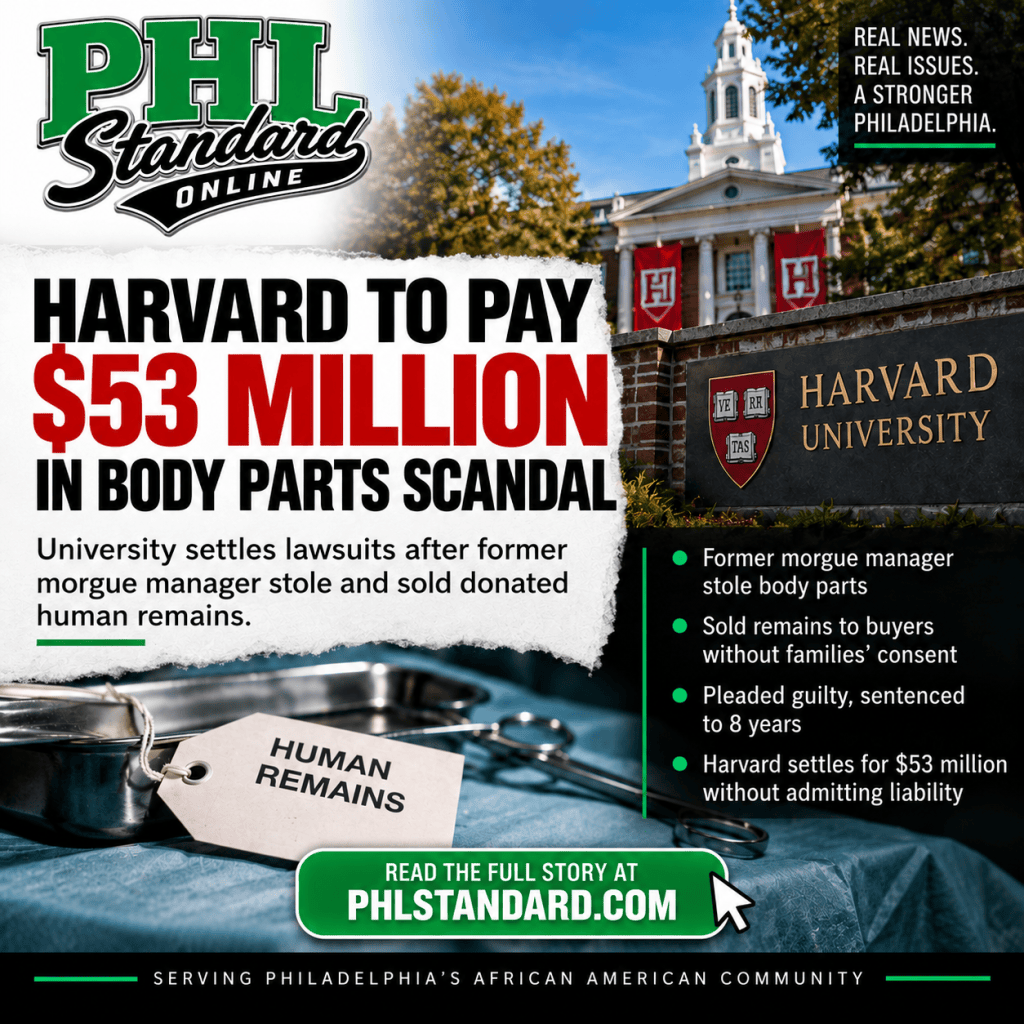
Harvard University has agreed to pay $53 million to settle lawsuits connected to a disturbing scandal involving human remains donated to Harvard Medical School, bringing renewed attention to how medical institutions safeguard bodies entrusted to them for education and research.
The scandal centers on Cedric Lodge, the former manager of the Harvard Medical School morgue. Federal prosecutors said Lodge stole portions of cadavers that had been donated through Harvard’s Anatomical Gift Program and sold the remains to buyers without the knowledge or permission of the donors or their families.
According to federal authorities, the scheme involved a variety of human remains, including heads, brains, skin, hands and other body parts. Some buyers were allegedly allowed to enter the morgue and select remains they wanted to purchase.
Lodge pleaded guilty to federal charges related to the illegal transportation and sale of stolen human remains. He was subsequently sentenced to eight years in federal prison.
The criminal case generated national attention not only because of the nature of the crimes but because the victims had voluntarily donated their bodies to one of the nation’s most prominent medical schools.
For many families, anatomical donation is based on trust. Donors expect their bodies to be used for legitimate medical education, training and scientific research and to be handled respectfully throughout the process.
Harvard’s Role in the Case
An important distinction has sometimes been lost as the story has circulated online.
Federal prosecutors did not accuse Harvard University itself of running or participating in the illegal body-parts sales operation. The criminal conduct was attributed to Lodge and others involved in buying or transporting the stolen remains.
Harvard nevertheless faced civil lawsuits from families who alleged that the university failed to adequately supervise its morgue, safeguard donated bodies and prevent Lodge from gaining unauthorized access to remains.
Those lawsuits ultimately led to the proposed $53 million settlement.
Harvard agreed to the settlement without admitting liability, meaning the financial agreement should not be interpreted as a legal admission that the university participated in Lodge’s criminal conduct.
Was Harvard Selling Body Parts on the Dark Web?
Another important distinction concerns claims circulating on social media that Harvard was caught “selling body parts on the dark web.”
That description goes beyond what the federal criminal case established.
Authorities documented an illegal network involving stolen human remains being sold and transported to buyers. But that is different from evidence that Harvard itself operated a dark-web marketplace or knowingly sold donated remains.
A more accurate description is that a former Harvard Medical School morgue manager stole and illegally sold human remains that had been entrusted to Harvard.
The distinction does not diminish the seriousness of what occurred. Families had entrusted their loved ones’ bodies to Harvard specifically for medical education and scientific research.
Questions About Medical Body Donation Programs
Beyond Harvard, the case raises broader questions about security and oversight at anatomical donation programs across the country.
Universities and medical schools that accept donated bodies assume significant responsibility for controlling access to those remains, documenting how they are used and ensuring they are treated according to applicable laws and institutional policies.
The Harvard case demonstrates what can happen when those safeguards fail.
For the affected families, the $53 million settlement represents the civil resolution of litigation arising from a betrayal involving something deeply personal: the remains of relatives who believed their final contribution would help educate future physicians and advance medical science.

