By JA Williams Jr
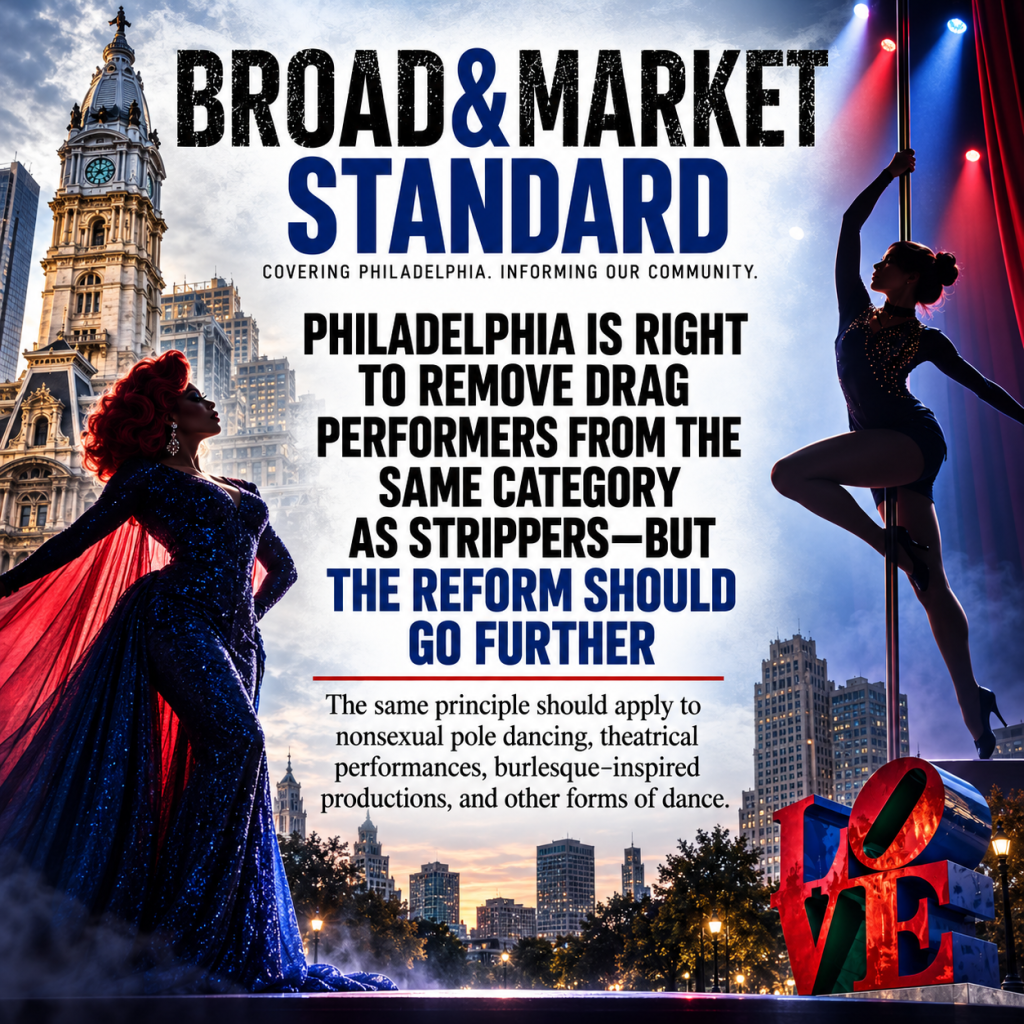
The same principle should apply to nonsexual pole dancing, theatrical performances, burlesque-inspired productions, and other forms of dance.
Philadelphia City Councilmember Rue Landau has proposed legislation that would remove the phrase “male or female impersonators” from the city’s definition of an adult cabaret.
In plain language, the bill would remove drag performers from the same specifically named zoning category as strippers, topless dancers, go-go dancers, and exotic dancers.
That is a reasonable change.
A person should not be classified as an adult entertainer simply because of the clothing they wear, the gender they portray, or the type of character they perform. Drag can be comedic, theatrical, musical, political, family-friendly, or sexually suggestive—just like many other forms of entertainment.
The content of the performance should determine how it is regulated.
Philadelphia’s current zoning code defines an adult cabaret as an establishment featuring topless dancers, go-go dancers, exotic dancers, strippers, “male or female impersonators,” or similar entertainers who expose specified body areas, perform specified sexual activities, or act in a “lewd, sexually erotic, exciting, or stimulating manner.”
Removing the reference to “male or female impersonators” would mean that being a drag performer alone would no longer place someone in the adult-cabaret category.
That does not mean drag shows could be held anywhere without restrictions. Venues would still have to follow zoning, occupancy, fire-safety, noise, liquor, entertainment, and licensing requirements. A drag performance involving nudity or explicitly sexual conduct could also remain subject to adult-entertainment regulations.
The proposal therefore does not eliminate Philadelphia’s regulation of sexually explicit businesses. It separates the identity or presentation of the performer from the actual content of the performance.
However, City Council should consider going one step further.
An athletic or artistic pole-dancing performance should not automatically be treated like a strip-club performance simply because it uses a pole or resembles a style sometimes associated with adult entertainment. The same content-based standard should apply to theatrical productions, burlesque-inspired shows, and other forms of dance.
A more consistent zoning amendment would remove identity- and profession-based labels altogether and define adult entertainment according to conduct:
«“Adult cabaret” means an establishment featuring performances that include specified anatomical areas, specified sexual activities, or objectively sexually explicit conduct, regardless of the performer’s gender, identity, costume, or style of dance.»
That approach would protect ordinary drag shows, athletic pole performances, theatrical productions, and other nonsexual entertainment while preserving appropriate zoning restrictions for genuinely explicit performances.
Philadelphia should regulate what happens during a performance—not make assumptions based on who is performing or what style of entertainment is presented.
Landau’s bill is a sensible correction. A broader, conduct-based definition would make the zoning code even clearer, fairer, and more consistent.
 Uptown Standard