By James Williams
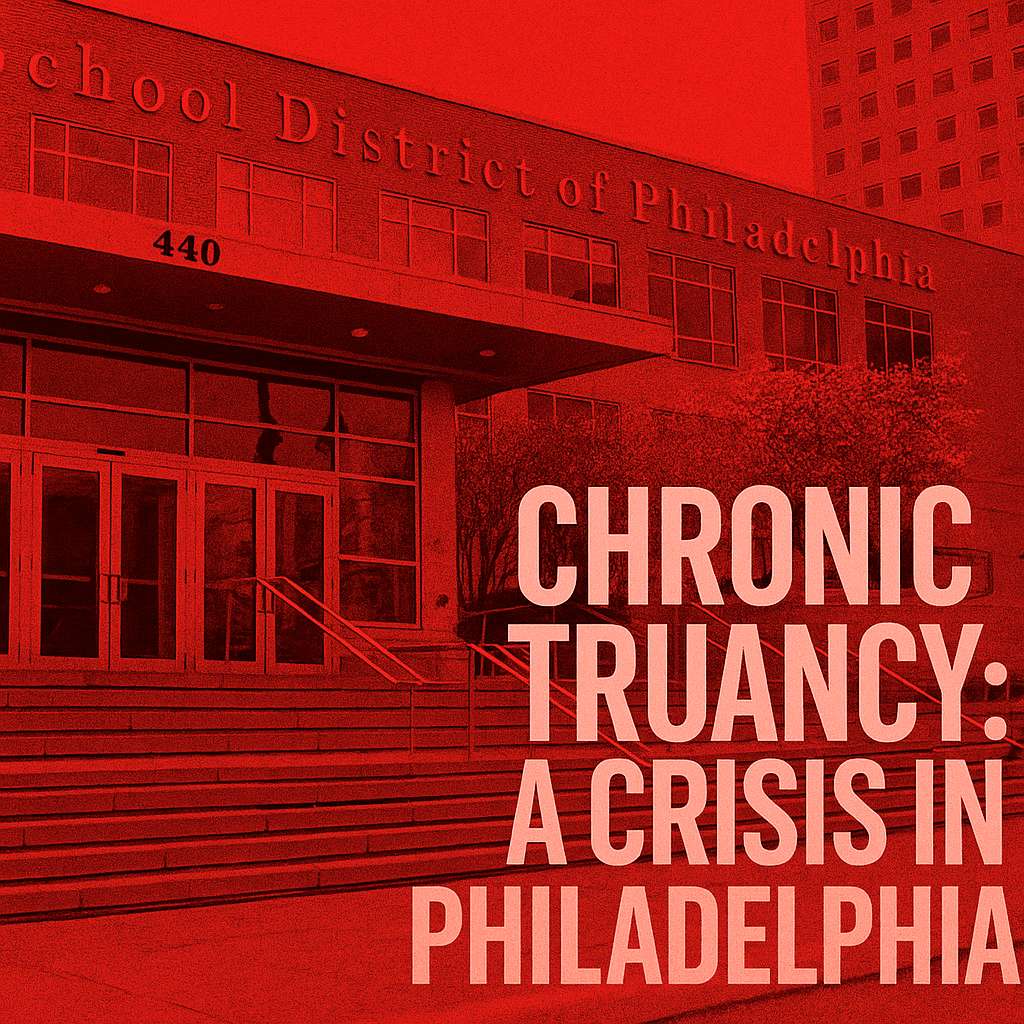
Chronic truancy has emerged as one of Philadelphia’s most urgent and dangerous social crises — one that connects the classroom to the courthouse and shapes the city’s future far beyond the walls of its schools.
In the aftermath of the COVID-19 pandemic, chronic absenteeism in Philadelphia schools rose by 93%, according to data from the School District of Philadelphia and the Economy League of Greater Philadelphia. That surge has shown no signs of slowing down. Across the city, thousands of students are missing more than 10% of school days, the threshold for being classified as “chronically absent.”
From Absence to At-Risk
Educators and city officials agree: chronic truancy doesn’t just mean missed homework — it’s the first step toward long-term disconnection and often, criminal involvement. “When our kids aren’t in school, they’re in danger,” said one retired principal from North Philadelphia. “The streets have their own curriculum, and it doesn’t lead to college.”
Police data and youth court records increasingly show a clear pattern. Many of the city’s youngest offenders — those arrested for car theft, gun possession, or assault — were already known to truancy officers. In many cases, their school attendance had dropped off months before their first encounter with law enforcement.
Understanding the Causes
The reasons students miss school are complex. Poverty remains a major driver: families facing eviction, food insecurity, or addiction often struggle to maintain stability. Health issues like asthma — one of the city’s most prevalent chronic illnesses among children — also keep students home.
Mental health has become another major factor. Anxiety, depression, and trauma—often linked to gun violence and family instability—have left many teens disengaged and fearful of returning to school.
Safety concerns also weigh heavily on parents. According to a recent Pew Charitable Trusts survey, nearly half of Philadelphia parents worry their children aren’t safe traveling to and from school. In neighborhoods with high crime rates, parents sometimes keep children home to protect them.
The System Struggles to Respond
The School District of Philadelphia has programs designed to address attendance issues, including Truancy Intervention and Prevention Services (TIPS), home visits, and social worker outreach. But as one administrator noted, “We’re drowning in need. Every school has a waiting list for help.”
Recent district data from early 2025 shows that 63% of schools reported an increase in late arrivals, and 54% reported more overall absences compared to last year — proof that despite interventions, the problem continues to spread.
The district defines truancy as three or more unexcused absences and chronic absenteeism as missing 10% or more of total school days, whether excused or not. Unfortunately, many families don’t fully understand these distinctions until the school begins issuing warnings or referring cases to municipal court.
The Link to Youth Crime
Juvenile court officials say the connection between truancy and youth crime is direct and measurable. Students who are habitually absent are more likely to fall behind academically, lose interest, and drop out — and high school dropouts are eight times more likely to be incarcerated than graduates.
“The kids we see in court are often the same kids schools have been flagging for years,” said one juvenile probation officer. “They don’t wake up one day and decide to break the law. It starts when they stop showing up.”
Beyond Punishment
While Pennsylvania law allows fines and legal consequences for truancy, experts warn that punishment alone rarely changes behavior. “You can’t fine your way out of poverty,” said a social worker who partners with the district. “We need intervention, not intimidation.”
Advocates are calling for increased investment in wraparound services — including counseling, mentorship, and after-school programs that create safe, consistent environments for students. Community-based organizations, churches, and recreation centers are being urged to step in where schools can’t.
A Call to Action
The fight against truancy must be seen as both an educational and public safety priority. City Council, the District Attorney’s Office, and local nonprofits have all pledged to focus more resources on prevention, but coordination remains a challenge.
“Truancy isn’t a school problem — it’s a community problem,” said an education advocate from Germantown. “If we don’t tackle it together, we’ll keep losing our kids to the streets before they ever have a chance to graduate.”
The Cost of Ignoring It
The consequences of inaction are staggering. Every chronically truant student represents not just a lost year of education, but a potential lifetime of struggle. From higher dropout rates to increased youth violence, the ripple effects reach every neighborhood.
If Philadelphia hopes to reverse its youth crime trends, it must start with attendance. Every child who walks into school each morning is one less likely to walk into court.
 Uptown Standard