By James Williams
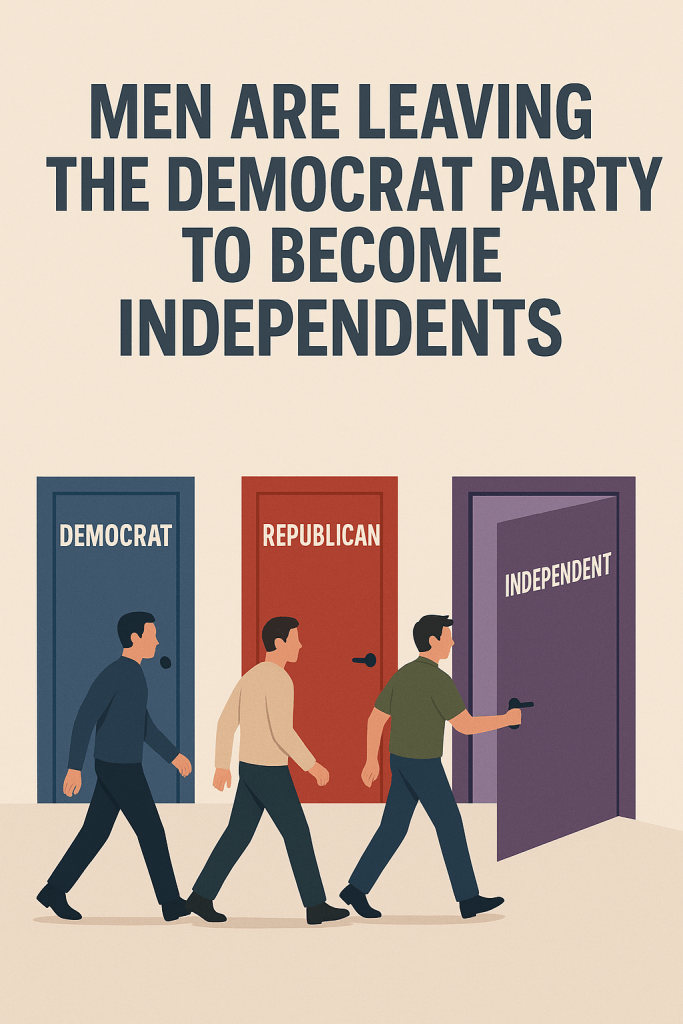
Across America, a quiet shift is taking place — and it’s reshaping the political map. More men, especially younger and working-class men, are walking away from the Democratic Party and calling themselves independent.
They’re not necessarily turning Republican — they’re turning away from the system itself. They’re rejecting what they see as two parties that no longer represent their values, their struggles, or their voice. I understand that sentiment because I’ve made that same decision. I left both the Democratic and Republican parties because I no longer felt I fit in either one. I grew tired of choosing between extremes, of trying to find truth in a system that rewards loyalty to party over loyalty to principle.
What I found instead is that independence isn’t isolation — it’s clarity. Like many other men across this country, I realized that the political divide has less to do with ideology and more to do with identity. Both parties have built their brands around telling people who to blame, instead of asking how to solve problems. For men who value family, faith, work, and leadership, that message rings hollow.
Recent studies from the Pew Research Center and Third Way show a widening gender divide in U.S. politics. Women continue to lean heavily Democratic, while men — particularly those under 40 — are moving in the opposite direction. In seven battleground states surveyed by Third Way, young men described Democrats as “anti-male” and disconnected from everyday realities. “I think being a masculine leader is outlawed in the Democratic Party right now,” said one young voter. That frustration reflects what I hear daily from men in barbershops, workplaces, and community meetings — they no longer feel seen or respected by the party they once trusted.
Many of these men don’t hate the Democratic Party — they simply don’t see themselves in it anymore. They see a movement that claims to speak for everyone but often talks down to the very people it once represented. They see policies built for corporations and cultural elites, not for fathers, tradesmen, or everyday workers. And when they look across the aisle, they don’t always find a better alternative — just a different kind of disconnect.
The Democratic Party once stood for working-class families. Now, some men say it’s become the party of lectures, not labor. Rising inflation, stagnant wages, and housing costs have hit young men hard, while gender politics and cultural battles dominate the headlines. This isn’t about left versus right — it’s about relevance. It’s about belonging. And too many men feel they’ve been pushed out of the conversation altogether.
That’s why many are choosing independence. They’re not rejecting government — they’re rejecting conformity. They’re choosing to think for themselves, to vote for ideas instead of party lines, and to define masculinity on their own terms. According to Pew, 56 percent of all independent voters are men, and their numbers continue to grow. These men aren’t extremists — they’re exhausted. They’re ready for leadership that values integrity over ideology.
The shift of men away from both major parties is more than a political story — it’s a cultural one. Every generation eventually decides what it will tolerate and what it will walk away from. This generation of men seems to be walking away from division itself.
I can’t speak for everyone, but I can say this: becoming independent has been liberating. I no longer feel the need to defend a team that doesn’t defend me. I vote based on character, not color. I support solutions, not slogans. And I believe there are millions of other men who feel the same way.
Men aren’t becoming conservative — they’re becoming independent thinkers. And in 2025, that might be the most powerful political identity of all.
 Uptown Standard