By James Williams
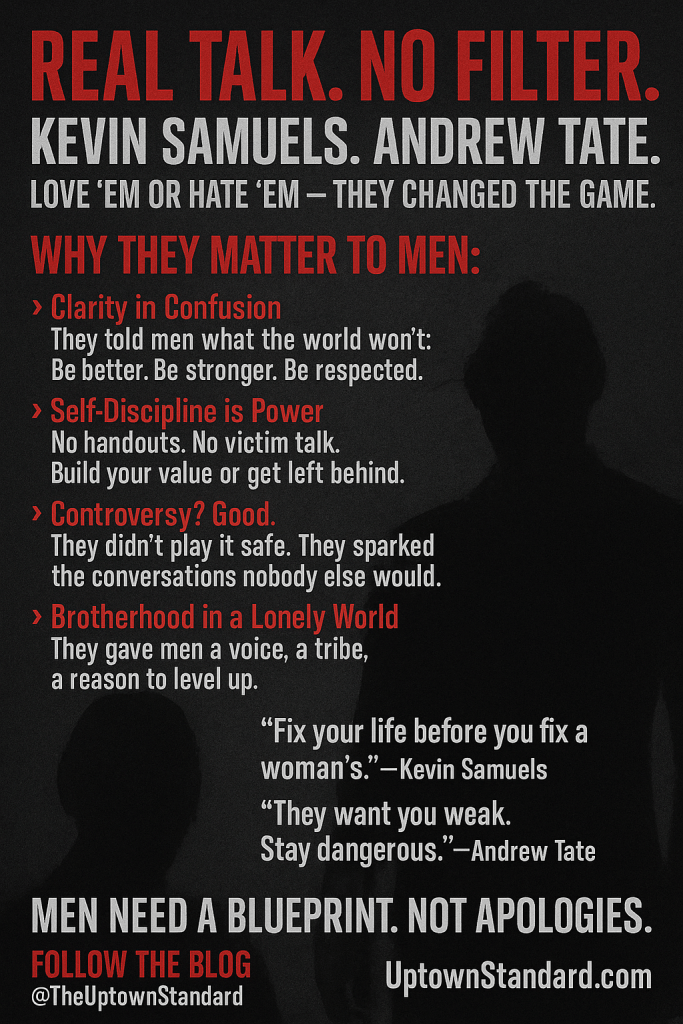
The rise of figures like Kevin Samuels and Andrew Tate reveals something important about the current state of masculinity: many men are looking for guidance, affirmation, and purpose.
Their popularity isn’t accidental. In a cultural moment where traditional male roles are under scrutiny and definitions of manhood are shifting, Samuels and Tate offer a clear—if controversial—message. Whether viewed as helpful or harmful, they’ve become key voices in the broader conversation about what it means to be a man today.
A Generation Seeking Direction
Many men—particularly younger ones—feel disconnected from mainstream narratives about masculinity. They’re told to be strong, yet vulnerable. To lead, but not dominate. To provide, but not expect. These contradictions often leave them unsure of what’s expected or allowed.
Kevin Samuels addressed this confusion with sharp directness. He promoted the idea of the “high-value man”—a concept rooted in personal accountability, self-presentation, and social capital. His tone was often blunt, but many men felt he was voicing uncomfortable truths.
Andrew Tate, meanwhile, gained a large following by emphasizing discipline, independence, and personal sovereignty. He speaks frequently about fitness, financial success, and resisting conformity. His brand of masculinity is bold, unapologetic, and highly visible on social media platforms.
Both men have been criticized for their tone and views on gender roles, but their influence signals that their messages resonate—especially in places where other guidance is lacking.
Social Media and Shifting Standards
Across media platforms, a different set of expectations often defines how masculinity is discussed—and sometimes criticized.
It’s not uncommon to see jokes or memes online targeting men for their height, income, or emotional expression. Men in age-gap relationships may be labeled “predators,” while women in similar relationships are celebrated for “getting their groove back.” Preferences expressed by men are sometimes dismissed as shallow or controlling, even as women are encouraged to articulate and pursue their own.
This isn’t necessarily about blame. But it is worth examining how cultural narratives often hold men and women to different standards—and how that may contribute to confusion and resentment.
The View and the Public Dialogue
Mainstream talk shows like The View have also shaped this conversation. Created in 1997, The View is known for its open discussions of politics, current events, and gender dynamics from a predominantly female perspective.
Critics of the show argue that its commentary sometimes reinforces negative generalizations about men. For example, statements about men being the problem in political outcomes or broader cultural failings occasionally go viral—and contribute to perceptions that the show is dismissive of male perspectives.
However, defenders argue that The View provides space for women to speak candidly about their experiences, and that these conversations are part of a necessary shift toward greater gender equity.
The Limits of “Alpha Male” Messaging
While Samuels and Tate have gained loyal followers, they’re also part of a growing “alpha male” influencer ecosystem that thrives on attention, controversy, and monetizing male insecurity.
This version of masculinity often promotes dominance, control, and exclusion as masculine ideals. It emphasizes hierarchy over connection, status over substance, and certainty over curiosity. For some, this is motivating. For others, it’s alienating.
Either way, it is a narrow definition of manhood—one that leaves little room for emotional nuance, collaboration, or reflection.
A Healthier Model: Mature Masculinity
There are other voices in the men’s development space offering a different approach—one rooted in self-awareness, emotional strength, and grounded leadership.
Connor Beaton, founder of ManTalks, encourages men to explore their inner world and confront their emotional challenges without shame. He emphasizes shadow work, personal responsibility, and relational integrity.
John Wineland, a teacher in men’s embodiment work, speaks to the power of presence, emotional fluency, and purpose-driven masculinity. His approach blends spiritual and relational depth with physical awareness.
Dr. Robert Glover, author of No More Mr. Nice Guy, addresses the need for men to reclaim their authenticity, set healthy boundaries, and live with intention.
These figures present an alternative path—one where masculinity is not about control, but consciousness. Not dominance, but direction. They frame manhood as a journey, not a performance.
Final Reflection
Kevin Samuels and Andrew Tate opened doors to discussions that many men felt were missing. They gave voice to frustrations and offered structure in a time of confusion.
But the conversation can’t stop there.
For masculinity to truly evolve, men must be encouraged to grow not just in strength, but in character. That means balancing discipline with compassion, confidence with humility, and leadership with listening.
There’s room at the table for all types of men—but not all messages serve all men equally. The challenge now is to move beyond viral personalities and toward lasting personal development.
“Fix your life before you fix a woman’s.” – Kevin Samuels
“They want you weak. Stay dangerous.” – Andrew Tate
“Know your darkness so you can be a better man in the light.” – Connor Beaton
“Lead with depth, not dominance.” – John Wineland
 Uptown Standard