But Does It Matter Anymore?
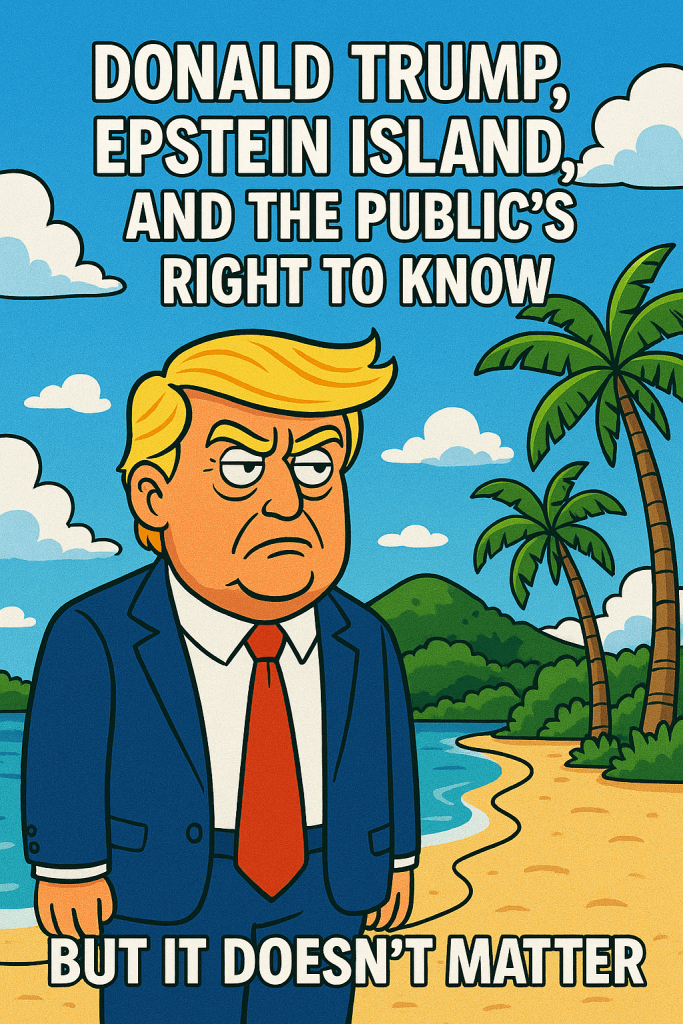
By James Williams
If the American people truly wanted answers about Donald Trump’s ties to Jeffrey Epstein, they’d likely need to flip control of Congress to the Democrats. But that assumes the public wants answers more than they dislike Democrats—which polling suggests is simply not the case.
According to a July Quinnipiac University poll, only 19% of Americans approve of the job Democrats in Congress are doing—an all-time low since the poll began tracking them in 2009. Meanwhile, President Trump, despite his controversies, maintains an approval rating between 43% and 47%, depending on the poll. In raw political terms, Trump is polling twice as well as congressional Democrats.
This isn’t because Trump’s record is spotless. His name appears in Jeffrey Epstein’s flight logs. He was photographed with Epstein. He’s been accused—though never charged—in incidents involving underage girls, including a 1980s Atlantic City casino incident witnessed by a former Trump Plaza executive. Survivors say they reported Trump’s name to the FBI—twice.
No charges. No subpoenas. No hearings. No consequences.
Allegations, Appearances & Apathy
There’s no hard evidence that Trump ever set foot on Epstein’s island. But there’s also no serious investigation into the possibility—and no incentive for one either. To investigate Trump, Democrats would need political power. And to gain that power, the public would need to care more about character than party lines.
Right now, they don’t.
But Does It Even Matter?
In today’s political climate, it seems character is only an issue when it belongs to the opposing party. When given the choice between accountability and ideological comfort, the public often chooses the latter.
So unless something changes—unless voters decide that integrity outweighs partisanship—don’t expect answers.
Don’t expect justice.
Don’t expect truth.
Just expect silence.
Because in 2025, truth doesn’t win elections. Loyalty does.
 Uptown Standard