By James Williams, Editor
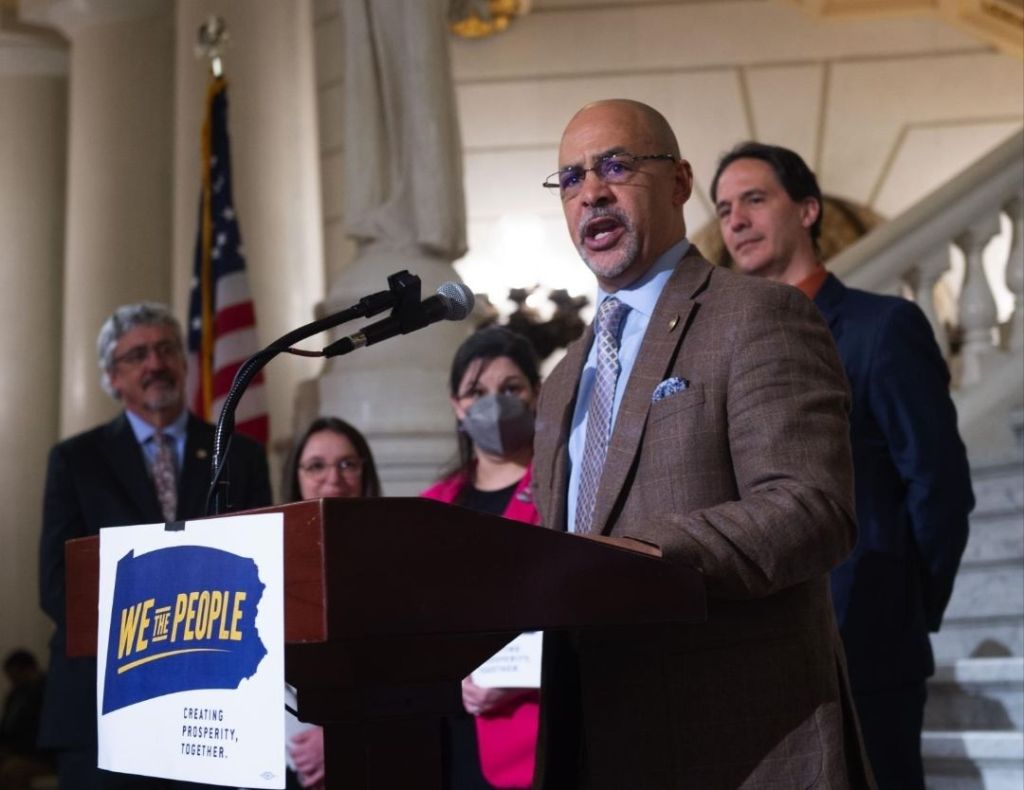
Pennsylvania State Representative Chris Rabb (D-Phila.) has introduced legislation to designate the first Monday of every February as “Emancipation Day” in Pennsylvania. The proposal seeks to highlight the state’s historical role in the abolition of slavery and acknowledge the ongoing struggle for racial equality.
Rep. Rabb emphasized the importance of this recognition, stating,
“With our constitution and civil rights under daily assault, I feel it is more important than ever for us as a state and nation to acknowledge the ongoing struggle for equality and justice that persists in our culture.”
Pennsylvania played a pivotal role in ending slavery, starting with the passage of the Act for the Gradual Abolition of Slavery in 1780, the first legislative effort in the American colonies to phase out slavery. The law gradually freed enslaved individuals born after its enactment while allowing existing enslaved people to remain in bondage. It took 67 years for the last enslaved Pennsylvanian to be freed.
On February 3, 1865, Pennsylvania became the sixth state to ratify the Thirteenth Amendment, ensuring the abolition of slavery throughout the United States. Rep. Rabb’s legislation aims to permanently recognize this historic achievement and acknowledge the state’s role in securing freedom beyond carceral punishment.
Rep. Rabb’s bill aligns with Black History Month’s broader mission by ensuring that the state formally acknowledges its historical contributions to abolition and the ongoing barriers that persist against Black communities. The proposed unpaid state holiday would serve as an annual reminder of both past struggles and the continued fight for racial justice.
He underscored the need for this recognition, stating:
“It is incumbent upon us as a state and as a legislative body to acknowledge – and more importantly accept and embrace – that while we cannot change the past, it is still well within our collective power to accurately portray it by documenting all contributions to our shared history.”
The Act for the Gradual Abolition of Slavery (1780) was a landmark law that set a precedent for other Northern states. Key provisions included:
Gradual Emancipation – Children born to enslaved mothers after 1780 were to be freed at age 28.
Freedom Dues – Upon release, formerly enslaved individuals were entitled to tools and assistance.
Slave Registration – All enslaved individuals had to be registered, with failure to do so resulting in automatic freedom.
Restrictions on Slavery – The law prohibited the importation of new enslaved people into Pennsylvania.
Despite opposition, particularly from German Lutheran and Reformed communities, and ongoing illegal slave trade in border regions, the law led to a steady decline in slavery. By 1850, slavery had been completely eradicated in Pennsylvania.
If passed, Emancipation Day would serve as a permanent acknowledgment of Pennsylvania’s contributions to the abolition movement and the ongoing work needed to achieve racial equality. The legislation will now move forward for debate and consideration in the state legislature.
The Town Crier is a Rapid Response news blog that is written by James Williams and created in collaboration with ChatGPT. For research assistance and content editing.
 Uptown Standard