By James Williams, Editor-In-Chief
With SCOTUS making politically polarizing decisions ending Affirmative Action for college admissions.
In the case of “Students for Fair Admissions Inc. v. President & Fellows of Harvard College”, which ruled that colleges and universities no longer need to consider race as a factor in admissions, colleges and universities are permitted to use how ones race has affected their life experiences as long as it is “concretely tied” to a “quality of character or unique ability” that the applicant possesses. This decision directly affects Blacks, Hispanics, and Asians who are looking to gain acceptance into white institutions.
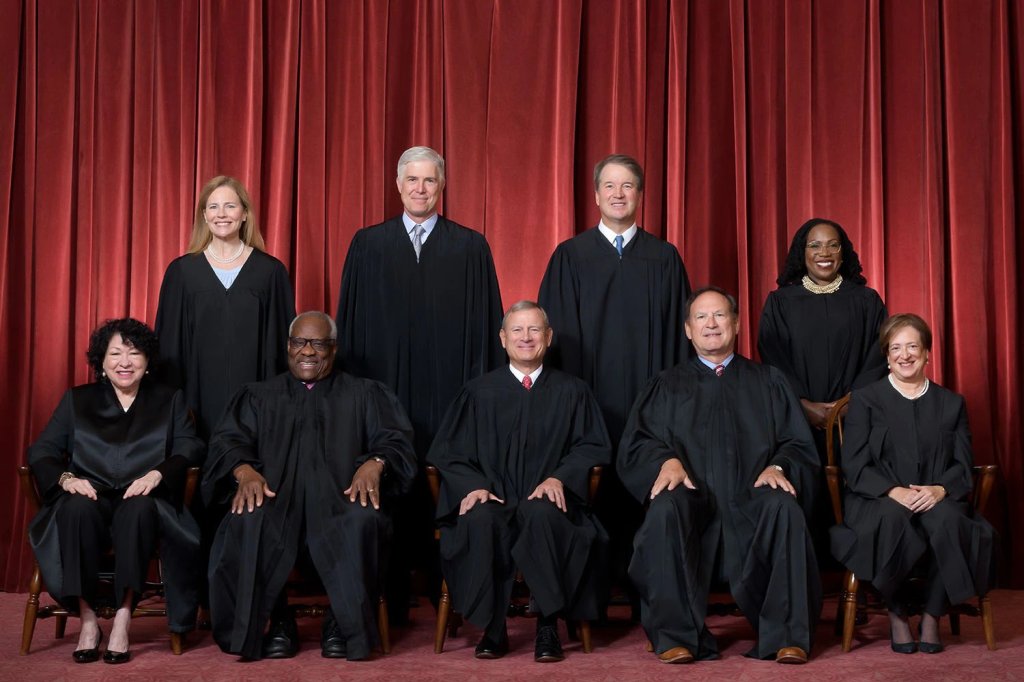
Chief Justice Roberts stated the following, “Racial classifications are simply too pernicious.”The conclusion reached by the Brown Court was thus unmistakably clear: the right to a public education ‘must be made available to all on equal terms.
Dissenting justices, Sonia Sotomayor, Elena Kagan, and Ketanji Brown Jackson, all disputed Roberts’ interpretation of Brown vs Board. Brown stated that “Brown was a race-conscious decision that emphasized the importance of education in our society.”
Justice Clarence Thomas voiced his opinion about the “defense of the colorblind Constitution”,explaining that “all forms of discrimination based on race — including so-called affirmative action — are prohibited under the Constitution.”
Considering the point that Justice Thomas’s ascent to power was largely due to affirmative action policies, many pundits find his opinion troubling and lacking in understanding of how the law is written, compared to how it actually works for Blacks and Hispanics.
Many feel that this decision could result in a boost for HBCUs. I’m not sure about that, but let’s imagine that the top students coming out of the black community choose Howard over Harvard. Considering that Harvard can pass on recruiting minorities and recruit more affluent less qualified white students, who due to affirmative action, weren’t accepted to make space for a minority student.
Tony Allen, president of Delaware State University, stated in a letter to their alumni, “More students of color, who might have chosen to apply to a predominantly white institution, will now apply to and attend an HBCU instead. HBCUs — and an ever-broadening array of HBCUs — will draw a greater number of talented students of color. We will welcome them as we have always done, and we will need stalwart partners to help us in our work.”
Philadelphia City Councilmember Katherine Gilmore Richardson and State Representative Morgan Cephas stated the following:
“It was a dark day yesterday when the Supreme Court ruled on affirmative action. The Supreme Court is banning race-conscious admissions, in the cases of Students for Fair Admissions v. University of North Carolina and Students for Fair Admissions v. Harvard College. The race component won’t be taken into consideration for college admissions,” -State Representative Morgan Cephas
“I am extremely disappointed that the U.S. Supreme Court has restricted affirmative action at colleges nationwide.” -Councilwoman Katherine Gilmore Richardson.
“States that have banned affirmative action in the past, including California, Michigan, and Florida, have seen drastic declines in their diverse student population – especially as it relates to Black and Hispanic students. I’m calling on my colleges in Philadelphia and across Pennsylvania to remain committed to fostering a diverse student body while following the narrow confines of this ruling.” -Councilwoman Katherine Gilmore Richardson
Councilwoman KGR was correct in her statement in support of Harvard and UNC affirmative action-based admissions policies. And yes, the following states have banned affirmative action in college admissions and are following the race-neutral approach; Arizona, California, Florida, Idaho, Michigan, Nebraska, New Hampshire, Oklahoma, and Washington.
The University of California chancellors sent an amicus brief to SCOTUS that stated diversity gains but minority enrollment shortfalls in their universities from years of race-neutral policies: “Those programs have enabled UC to make significant gains in its system-wide diversity,” the brief said. “Yet, despite its extensive efforts, UC struggles to enroll a student body that is sufficiently racially diverse to attain the educational benefits of diversity.”
Many believe this decision will roll back decades of progress in education for minorities. Based on the court’s majority statement, the goal is to move us to race-neutral college admissions.
What does race-neutral actually mean in regards to college admissions? It simply means giving preference to students with a lower socioeconomic status, typically determined by family income and the occupations and education levels of members of students’ households.
At Least for now, they have achieved this goal in the education sector.
Justice Clarence Thomas stated that race-neutral policies can have the same effect as affirmative action. Thomas believes that race-neutral policies can “achieve the same benefits of racial harmony and equality without any of the burdens and strife generated by affirmative action policies.”
Justice Sonia Sotomayor responded, “The majority’s vision of race neutrality will entrench racial segregation in higher education because racial inequality will persist so long as it is ignored”.
This Court’s majority has made it very clear that their goal is to move more towards race-neutral policies in cases challenging affirmative action and/or current race-conscious policies.
 Uptown Standard